


How to Become a Hospital Administrator: Steps and Salary
Key takeaways
- Hospital administrators typically enter the broader medical and health services management field with a bachelor’s degree and relevant healthcare experience, while some employers prefer graduate education for more senior roles.
- Most hospital administration positions do not require a specific management license, although some roles may require professional licensure, and nursing home administrators must be licensed by the state.
- Relevant experience may come from administrative or clinical healthcare roles, giving professionals several routes into hospital management.
- Medical and health services managers earned a median annual wage of $123,860 in May 2025, and BLS projects employment to grow 24% from 2025 to 2035.
Hospital administration brings together healthcare operations, management, and leadership. According to the U.S. Bureau of Labor Statistics, medical and health services managers typically need a bachelor’s degree and previous experience in an administrative or clinical healthcare role, while some employers prefer candidates with a master’s degree.
For working professionals and career changers, including nurses, allied health professionals, healthcare administrative staff, and individuals seeking to transition into healthcare management, advanced education can help develop the knowledge and skills needed for career advancement.
How to become a hospital administrator: Step by step
Hospital administrators often build their careers through a combination of education and healthcare experience. A bachelor’s degree is the typical entry-level education for medical and health services managers, while some employers prefer graduate education for more advanced positions. Professionals enter hospital administration from a variety of clinical and administrative backgrounds, with career pathways shaped by their education, professional experience, and long-term career goals.
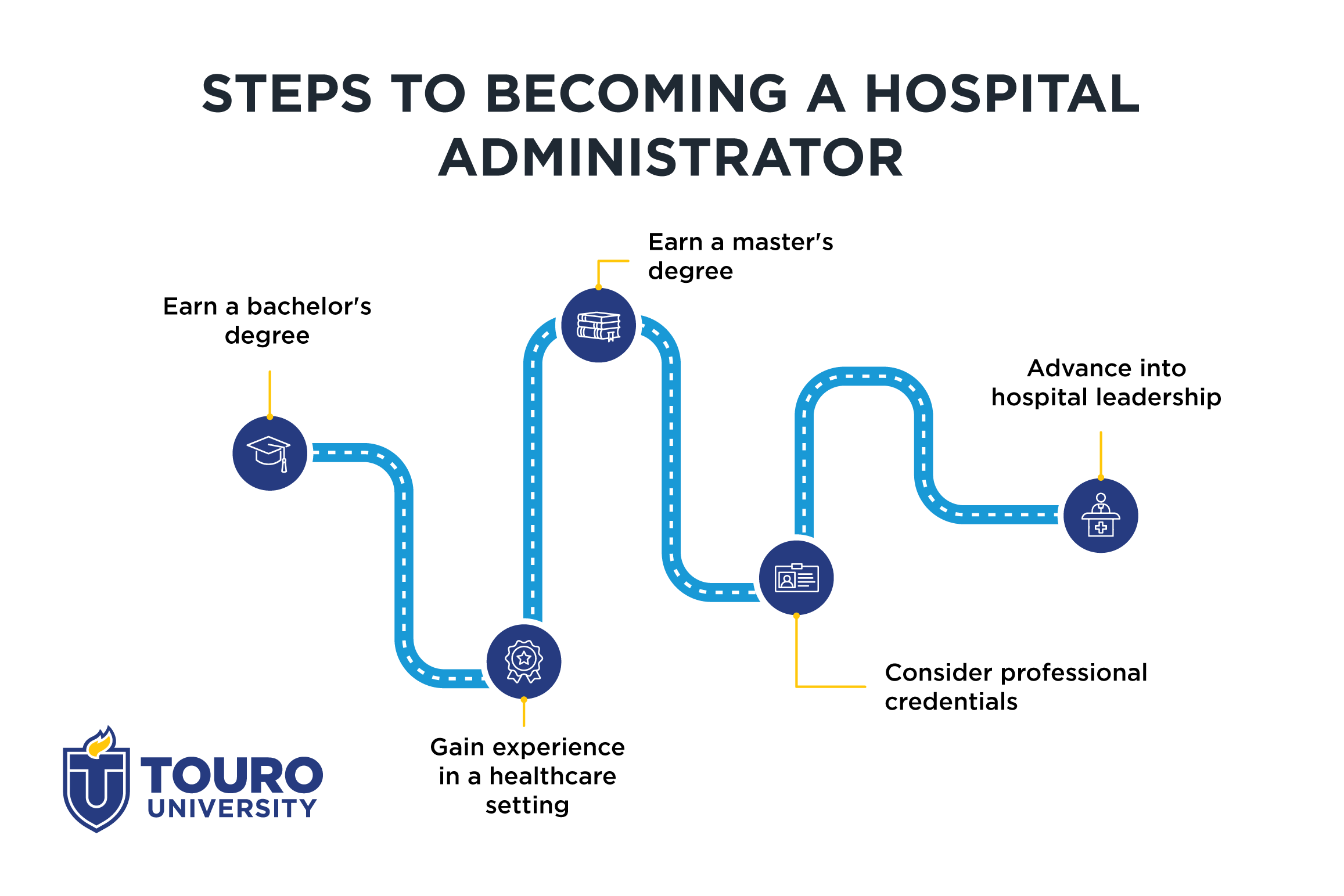
Step 1: Earn a bachelor’s degree
A bachelor’s degree is the typical entry-level education for medical and health services managers. Common areas of study include health administration, nursing, and business, although requirements vary by employer and position. Programs that combine healthcare and management may cover subjects such as healthcare systems, budgeting, health information systems, and organizational management.
Our online Bachelor of Science in Health Sciences offers a Healthcare Administration track with a Healthcare Management concentration. The 120-credit program is 100% online, uses eight-week courses, and accepts up to 90 eligible transfer credits. Full-time students can complete it in about three and a half years.
Step 2: Gain experience in a healthcare setting

Healthcare experience is an important part of preparing for management. BLS notes that employers may require prospective medical and health services managers to have experience in an administrative or clinical role in a hospital or other healthcare facility.
Administrative routes can begin in roles such as medical records, administrative support, or healthcare finance, while nurses and other clinical professionals may move into management after gaining experience in patient care. Working in a healthcare setting also builds familiarity with the staffing, financial, regulatory, and operational demands that hospital administrators eventually oversee.
Step 3: Earn a master’s degree
A master’s degree can strengthen your preparation for advanced healthcare management and executive roles, and some employers prefer graduate-level education. Common options include healthcare administration degrees focused specifically on healthcare operations and management, an MBA with a healthcare concentration for broader business training, and degrees such as an MPH or MSN for professionals whose goals center more on public health or nursing leadership. The degree comparison below looks at these options in more detail.
Our online Master of Science in Healthcare Administration is a 36-credit program designed for professionals who want to enter or advance in healthcare management. It is 100% online with eight-week courses and offers concentrations in Operations Management and Health Informatics. Full-time students taking two courses per term for six consecutive terms can complete the degree in one year. Tuition is $500 per semester credit.
Step 4: Consider professional credentials
Most hospital administration roles do not require a specific management license. However, some medical and health services management positions require state licensure, and all states license nursing home administrators. Licensure requirements vary by state and position. Nursing home administrators must be licensed in all states, and certain healthcare leadership roles may require an existing professional license, such as a registered nurse or social worker license. Prospective students should review the specific education, experience, and licensure requirements for their intended career path and state of employment.
Experienced healthcare managers may also pursue voluntary credentials. The Fellow of the American College of Healthcare Executives (FACHE) credential, for example, requires a master’s or other post-baccalaureate degree, a current healthcare management position, at least five years of healthcare management experience, continuing education, and other professional requirements before candidates complete the Board of Governors Exam.
Step 5: Advance into hospital leadership
Career progression depends on the organization and your area of expertise. Some professionals begin by managing a department or function and later take responsibility for larger operations, while others move into senior positions such as vice president, chief operating officer, chief financial officer, or chief executive officer. Advancement into top executive positions may require a master’s degree.
What does a hospital administrator do?

Hospital administrators plan, direct, and coordinate the business and operational activities of a hospital. Their responsibilities may include budgets, staffing, regulatory compliance, technology, and goals related to the efficiency and quality of healthcare services. Depending on the role, an administrator may oversee a single department, an entire hospital, or broader operations within a health system.
Hospital administration is part of the broader field of healthcare administration, which also includes management roles in physician practices, nursing and residential care facilities, outpatient centers, and other healthcare organizations.
Common responsibilities include:
- Finance and budgeting
- Staffing and workforce management
- Regulatory compliance
- Health information systems
- Operational efficiency and quality goals
Which degree path fits you? MHA, MBA, and other options
Several degrees can support a career in hospital administration. The main difference is how closely the curriculum focuses on healthcare management versus broader business, public health, or clinical leadership.
| Degree path | Best for | Typical length | What it prepares you for |
|---|---|---|---|
| Bachelor’s in health sciences or healthcare administration | Students preparing for entry into healthcare management | Around 4 years full time, potentially less with transfer credits | Healthcare systems, administration, and foundational management skills |
| Master’s in healthcare administration | Professionals seeking healthcare-specific management training | Often 1 to 2 years | Healthcare operations, finance, information systems, policy, and leadership |
| MBA with a healthcare concentration | Professionals who want broader business training applied to healthcare | Often 1 to 2 years | Business management, finance, strategy, and healthcare administration |
| MPH or MSN leadership track | Public health or nursing professionals moving toward management | Varies by program | Public health management, population health, or nursing leadership |
A healthcare administration master’s keeps the curriculum centered on managing healthcare organizations, while an MBA combines healthcare coursework with a broader business foundation. MPH and MSN options may make more sense for professionals whose careers remain closely tied to public health or nursing.
At TUW, students can choose between our online Master of Science in Healthcare Administration and MBA with a concentration in Health Administration Management. Both are 100% online and use eight-week courses, while their curricula offer different approaches to preparing for healthcare management.
How long does it take to become a hospital administrator?
The timeline depends on your education and the healthcare experience you already have. A bachelor’s degree typically takes about four years of full-time study, while medical and health services managers also usually enter the field with related administrative or clinical experience. Some professionals then add a master’s degree as they prepare for more advanced management roles.
Because graduate study and healthcare work can overlap, working professionals may build experience while continuing their education. Senior executive roles generally take longer to reach because they require progressively greater management responsibility.
At TUW, our online MHA can be completed in as little as one year by full-time students taking two courses per term for six consecutive terms. The 100% online format allows working professionals to continue building healthcare experience while completing their graduate education.

Hospital administrator salary and job outlook
Hospital administrators fall within the broader BLS category of medical and health services managers. According to BLS data, the median annual wage for this occupation is $123,860. Managers working in hospitals have a higher median wage of $133,580.
For the hospital administrator title specifically, average annual pay in the U.S. is currently estimated at about $110,000, with most reported salaries falling between approximately $78,000 and $139,000. These figures are based on job postings and third-party salary data, so they are best treated as a current market reference.
BLS projects employment of medical and health services managers to grow 24% from 2025 to 2035, with about 62,300 openings projected each year. Demand is expected to increase as an aging population requires more healthcare services and healthcare delivery becomes more complex through advances in technology, changing regulations, and new models of care.
Actual earnings vary by experience, location, employer, responsibilities, and the size and type of healthcare organization.
The bottom line
Hospital administration offers several routes into healthcare leadership, with opportunities to advance as you build experience and take on greater responsibility. A bachelor’s degree is the typical entry-level education, while graduate education can support progression into more advanced management and executive roles. With a median annual wage of $123,860 and 24% projected employment growth from 2025 to 2035, the broader field offers strong long-term career prospects.
If you’re ready to build your healthcare management expertise, explore our online Master of Science in Healthcare Administration at Touro University Worldwide, a nonprofit university accredited by the WASC Senior College and University Commission (WSCUC). You can also review financial aid options or connect with admissions to request information or begin an application.
Frequently asked questions (FAQs)
Can you become a hospital administrator without a master’s degree?
Yes. BLS identifies a bachelor’s degree as the typical entry-level education for medical and health services managers. Some employers prefer candidates with a master’s degree, and graduate education may become more important as you pursue senior management or executive positions.
What degree do most hospital administrators have?
Common undergraduate fields include health administration, nursing, and business, while some professionals later earn a master’s degree in healthcare administration, business, or another related field.
Do hospital administrators need clinical experience?
No. Relevant experience can come from either the clinical or administrative side of healthcare. BLS notes that prospective medical and health services managers typically have experience in an administrative or clinical role in a hospital or another healthcare facility.
How do you become a hospital CEO?
Hospital CEO roles generally come after progressively responsible healthcare management experience. Professionals may advance from department or facility management into broader executive responsibilities, and progression into top executive positions may require a master’s degree.
Can you become a hospital administrator with an online degree?
Yes. An online degree can prepare you for healthcare administration when it meets the education requirements of the positions you pursue. TUW’s online Master of Science in Healthcare Administration is delivered entirely online through a university institutionally accredited by WSCUC.
Is hospital administration a good career?
Hospital administration can be a strong option for professionals interested in healthcare leadership, operations, and organizational decision-making. BLS projects employment of medical and health services managers to grow 24% from 2025 to 2035, with about 62,300 openings projected each year, while the occupation has a median annual wage of $123,860.